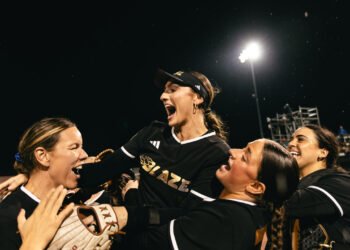

After another successful championship season of the Athletes Unlimited Softball League, all trends point toward rapid growth and to a league that is only gaining steam.
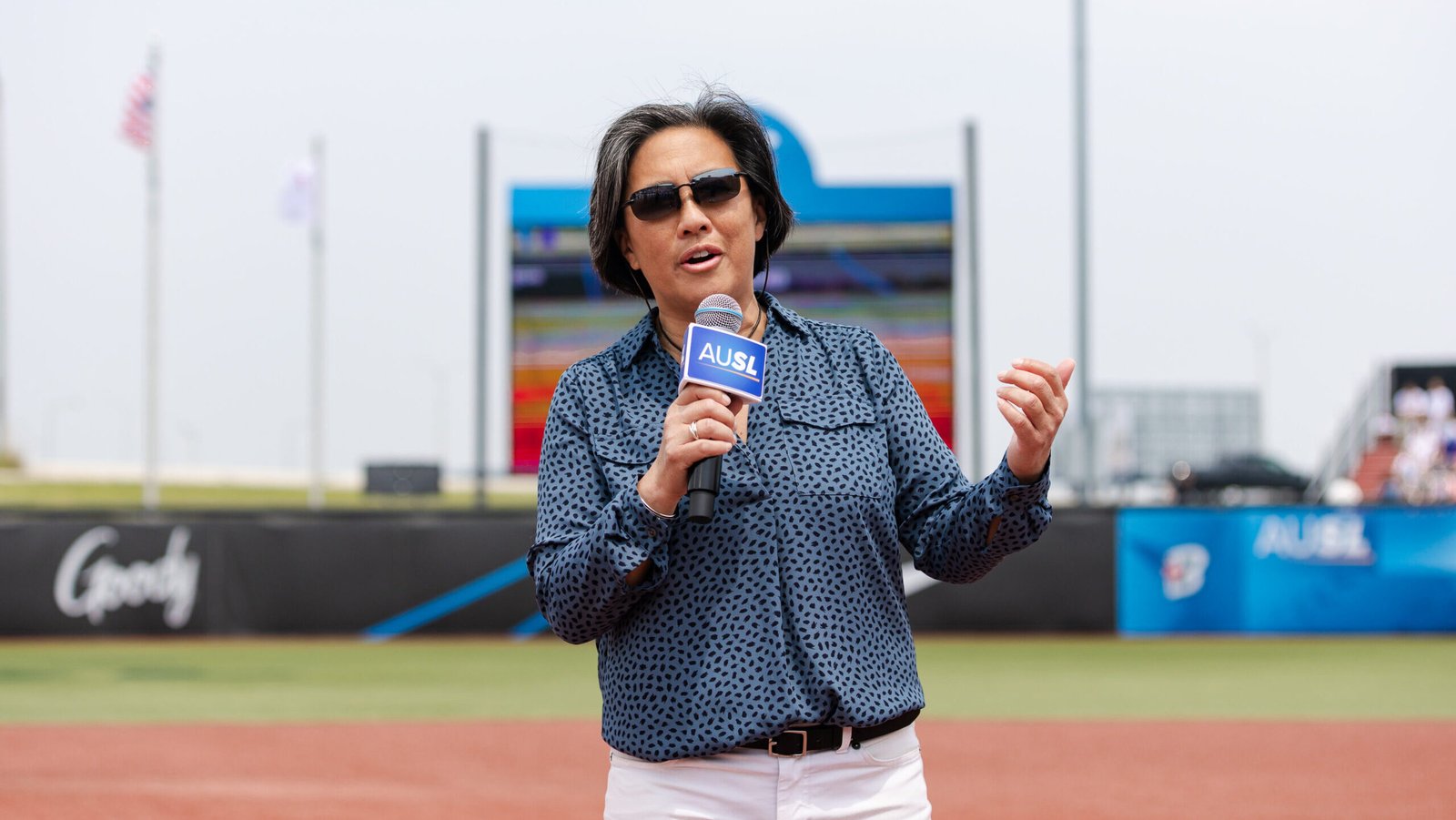
League leadership laid out the case on Wednesday’s end-of-season media call, with CEO and co-founder Jon Patricof and Commissioner Kim Ng walking through a season two that rewrote the sport’s viewership records and pushed business metrics in the right direction.
The headline number came from Saturday, when Game 1 of the AUSL championship series aired on ABC, marking the first time a pro softball game had ever been carried on broadcast television. It averaged 732,000 viewers.
“We’re really proud to report that that broadcast averaged 732,000 viewers,” Patricof said, “making it the most-watched pro softball game ever.”
That ABC window did not stand alone, though, and it capped a full year of growth across ESPN’s platforms.
“That is the culmination of what has been an absolutely remarkable season two, marked by over 150 percent average ratings growth on ESPN,” Patricof said. “This year, ESPN broadcast over 47 games compared to only 18 games in 2025. We had 15 games on ESPN1 compared to only two games on ESPN1 last year.”
Also, the AUSL does not decide where its games are placed. ESPN does, choosing the channel and the window. For a league only in its second year, that kind of placement puts them alongside every major pro sport.
“I think the key with ESPN is that it’s really their call,” Patricof said. “We obviously want to be on as big a platform as possible with them, but they really are the ones who make the call as to where to play the game, where to broadcast the games, whether it’s ESPN or ESPN2, or it’s ESPNU. And so we try to do everything to support them.
“We try to do everything to encourage them. But they get to make the choices, and so we’re really honored when they decide to broadcast games on ABC and ESPN1, and I think that is evidence that they recognize that their fan base loves the product we’re putting out there.”
The reach extended beyond English-language broadcasts as well. ESPN Deportes carried 14 games, the first Spanish-language broadcasts in league history. The league’s ESPN agreement runs through the 2028 season, covering roughly 50 of the AUSL’s 90 games, with the rest on MLB Network and CBS.
For Ng, the volume was just as striking as the reach, with the league putting softball on some form of broadcast on all but one night of the entire season, whether on ESPN’s platforms, MLB Network or CBS Sports.
“To think that on any given night, a softball fan could turn on the TV or their computer and find us on somewhere is just remarkable,” Ng said.
The growth on the broadcast side tracked closely with what the league saw on the business side. No matter which side you look at, the AUSL shows massive improvement over year one.
“Our merch sales were up 110 percent,” Patricof said. “We had 23 regular season sellouts, plus two sellouts for the championship, so a total of 25 sellouts across the country. And our social platforms generated over 450 million impressions, up 97 percent year over year, 137 million video views, up 139 percent, and we added 447,000 new followers.”
Those gains helped bring new money and new names into the fold. The league added the Milwaukee Brewers, the first MLB organization to invest directly in the AUSL, along with Ryan Sanders Baseball, led by Nolan and Reid Ryan. New sponsors adidas, Goodr, MiraLAX and Labcorp came aboard, while Sephora, Rawlings, Franklin and Mizuno expanded their footprints. The Rawlings Gold Glove will return to softball this fall for the first time in years.
For all the season-long totals, the more telling story may have been the trend line, with the momentum building as the season went on and the gate following right along with it.
“Even in markets like Carolina, if you think of the games that we played in the first half of the season, our average attendance in the second half of the season was up about 50 percent,” Patricof said.
There is also a strong case building for more of it. Every head coach and general manager I’ve spoken with keeps landing on the same point, that the season goes by too fast. The coaches wouldn’t mind a handful of additional games to smooth out how the season flows. Texas Volts general manager Cat Osterman and others have mentioned it. Ng did not close the door on it.
“In the aftermath of the season, there are a lot of things that are on the table,” Ng said. “That speaks to the desire of the players, the general managers and the coaches, that there is a true thirst for this game. So I do think it’s on the table.”
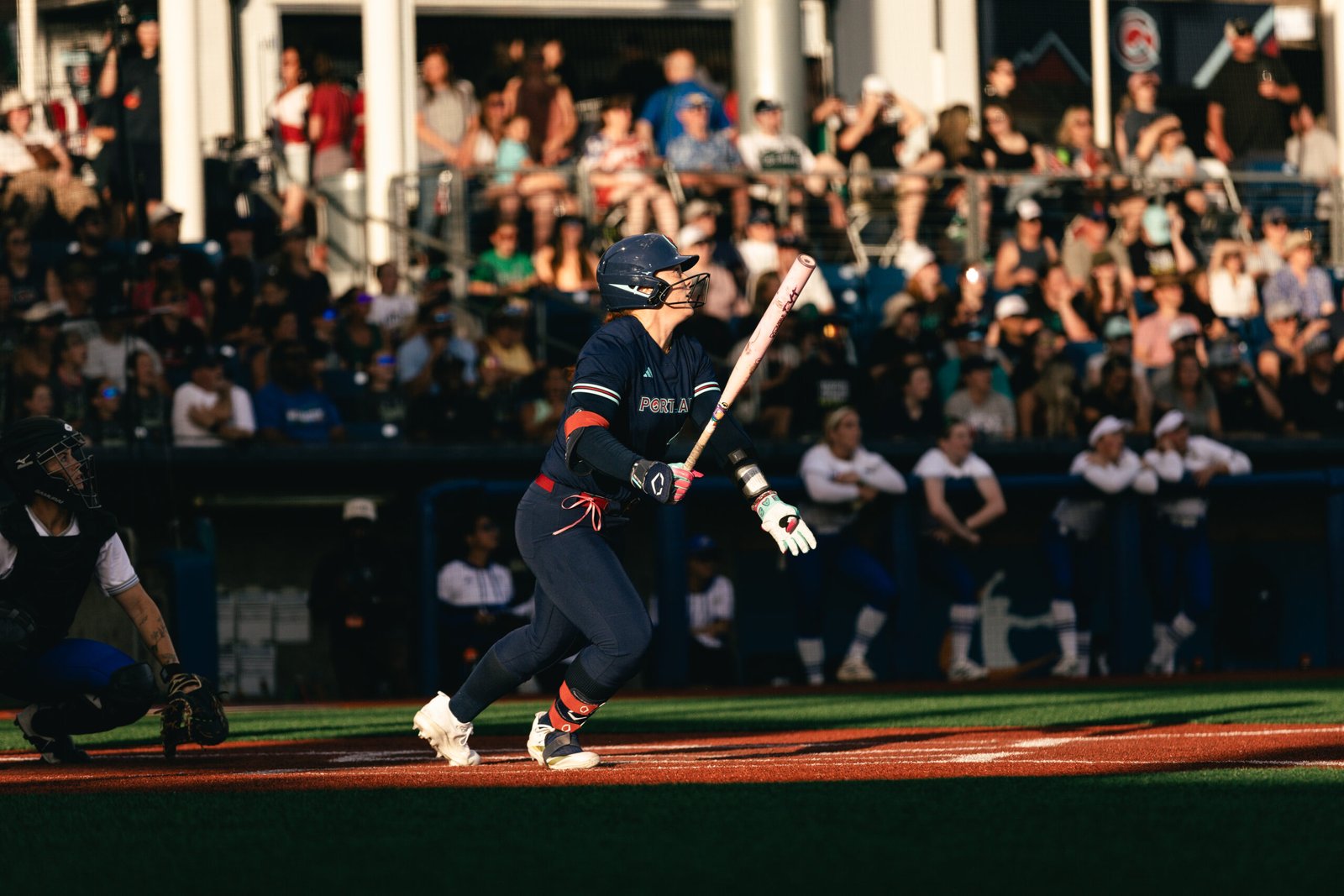
While Patricof handled a lot of the business numbers, Ng pointed to the on-field product as the engine behind all of it, starting with a rookie class that included the likes of Karlyn Pickens, Reese Atwood, Ailana Agbayani and Megan Grant. She also highlighted the Portland market, where the league drew near sellouts across the board despite never having played there before.
“One of our sellouts was a 9:30 a.m. game on a Sunday morning,” Ng said. “So to do that in a market, I think it tells you the strength and desire they have for the game of softball.”
Patricof did not know what to expect from the Portland market. It was a pleasant surprise to me as well. Ng, however, knew what to expect.
“Kim was the one who came out and really suggested Portland and really pushed it,” Patricof said. “And I have to say, I didn’t really know what to expect. It was not one of the cities we’d visited, so it was a big risk. And she really had the vision for that marketplace, and I think she was right that obviously it’s been an incredible, outstanding home.”
When it comes to the reserve pool, there are a lot of players who are waiting on a call. I asked Ng about whether the AUSL has looked at building something to keep those players game-ready and able to step in. Sort of like a minor-league system.
“You’re talking about a former GM in MLB where we had six minor leagues, sometimes eight minor league teams,” Ng said. “So yeah, I think it’s something that we have thought about quite a lot. Obviously we’ll get there when we think we’re ready.”
Keep in mind that the league is still in its infancy. Things take time and money to grow into what everyone envisions. Even with the reserves, Ng rightfully pointed to the great work the players have done to remain ready.
“Last year we had Jadelyn Allchin come out of the reserve pool, and then this year she was our championship series MVP,” Ng said. “So for the most part the players do a very good job of keeping themselves ready and in shape for that call that could happen at any moment.”
With the All-Star Cup set to begin next week, I asked whether the format is here to stay, or whether it eventually gives way to more of the team-based regular-season games that fans have gravitated toward.
“Being such a young league, I think you always want to be flexible and nimble, and make decisions when it calls for it,” Ng said. “So for all of us, we’re anxious to see what the All-Star Cup is going to do in August. And then we’ll be ready to figure everything out from there.”
Patricof brought a different viewpoint on the All-Star Cup that most don’t think of. It allows the league to look at what works and try out some things.
“The fact that we have this All-Star Cup allows us to try some things out, experiment a little bit more, and we’ll see where we go,” Patricof said.
He was just as intentional about what follows it. Even after the Cup wraps up at the end of August, Patricof said the league has no intention of going quiet, pointing to a full offseason slate of content, storytelling and special events meant to keep the AUSL in front of fans.
“Our job at the league is to really keep that fan engagement on and going and make it really fun to be a softball fan 12 months a year,” Patricof said.
Finally, with the championship now settled, I asked about a timeline for setting the 2027 site, after two successful years in passionate SEC sports towns.
“There are so many places. It’s hard to narrow it down,” Ng said. “We will, at some point, I would say in the next several months, have that narrowed down. One of the items that I’m going to be really focused on is going to different venues over the next month or two to try and figure out where we go. But it’s generally a fun process.”
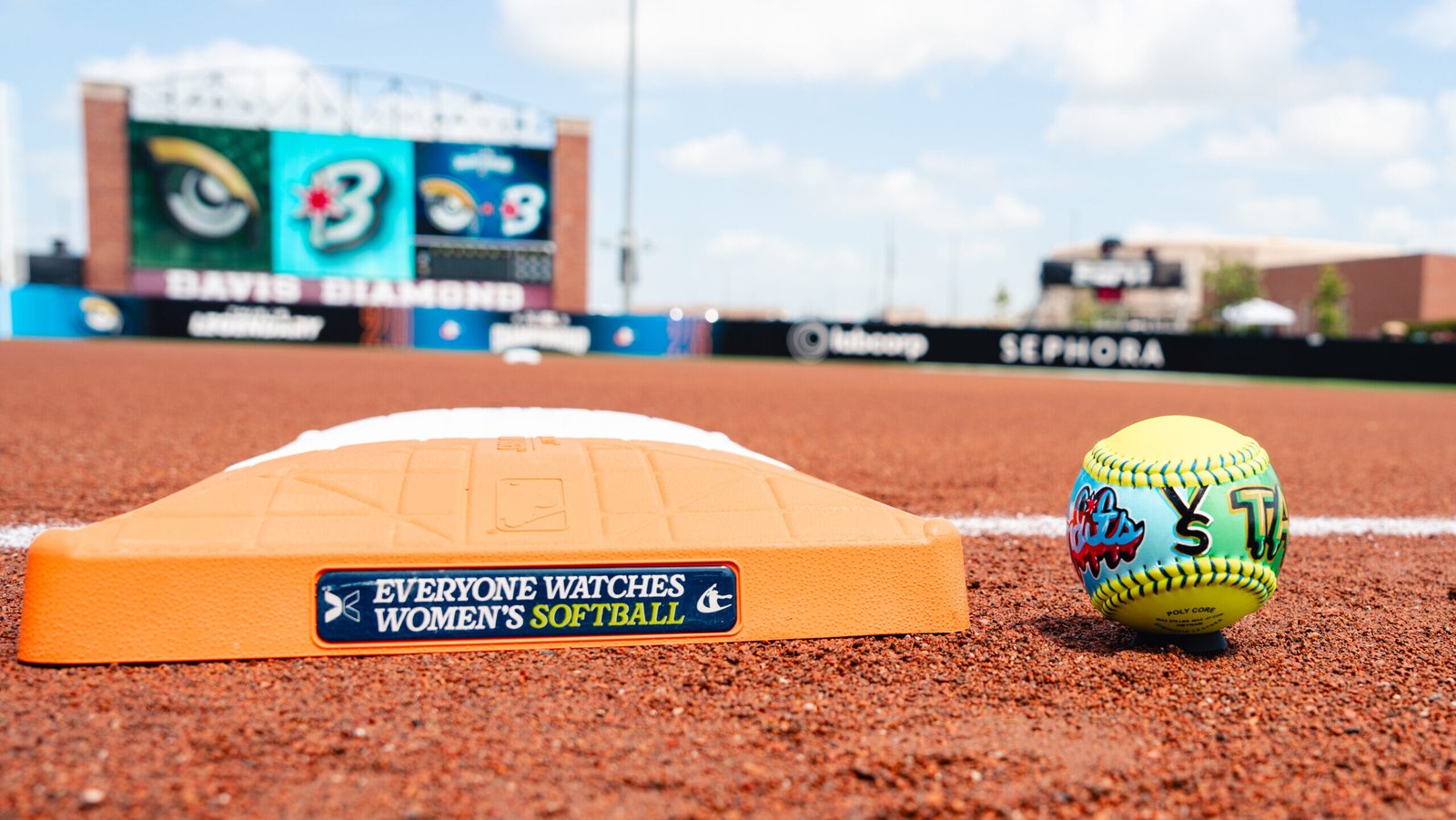
That process gives them not only a look at stadiums but a deeper read on each market.
“I think it gives us a sense of where we want to go for the future, and in terms of what I mean by that is markets as well as venues, and really what’s out there. So it’s a great learning process for us. But I would say in the next several months we’ll have some more news for you on that front,” Ng said.
For now, the site question stays open, but after a season two that put softball on network TV and packed stands from Carolina to Portland, the AUSL has shown that the growth and demand are real. With strategic steps from leadership, this league will continue to flourish and become stronger.